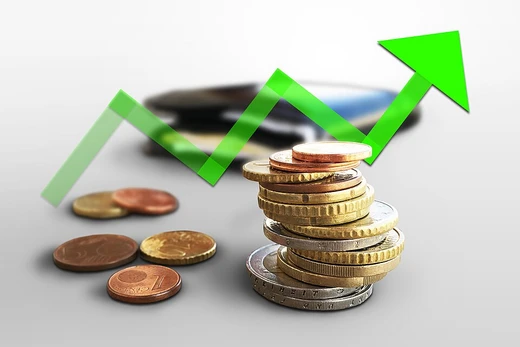
Inflation
An increase in the average price of goods and services.

Inflation is an economic concept referring to an increase in the average price of goods and services in terms of money, though it originally denoted an increase in the money supply (monetary inflation) that can cause such a shift. Measured using a price index such as a consumer price index (CPI), inflation corresponds to a reduction in the purchasing power of money. Its opposite is deflation, a decrease in the general price level. The inflation rate is the annualized percentage change in a general price index.
- field
- Economics
- known_for
- Increase in average price level; reduction in purchasing power of money
- related_concepts
- Deflation, disinflation, hyperinflation, stagflation, reflation, asset price inflation, agflation
Lore & Background
The term originates from the Latin 'inflare' (to blow into or inflate). Conceptually, inflation refers to the general trend of prices, not changes in any specific price. For example, if people choose to buy more cucumbers than tomatoes, cucumbers become more expensive and tomatoes less expensive; these changes reflect a shift in tastes, not inflation. Inflation is related to the value of currency itself. When currency was linked with gold, if new gold deposits were found, the price of gold and the value of currency would fall, and consequently, the prices of all other goods would become higher.
Reader's Guide
Inflation has been a feature of history during the entire period when money has been used as a means of payment. Historically, when commodity money was used, periods of inflation and deflation would alternate depending on the condition of the economy. However, large, prolonged infusions of gold or silver into an economy could lead to long periods of inflation. The adoption of fiat currency from the 18th century onwards made much larger variations in the supply of money possible. Since the 1980s, inflation has been held low and stable in countries with independent central banks, leading to the Great Moderation. Today, most economists favour a low and steady rate of inflation, which reduces the likelihood of economic recessions and avoids the costs associated with high inflation. The task of keeping inflation low and stable is usually given to central banks that control monetary policy through setting interest rates and open market operations.
Did You Know?
- The term 'inflation' originates from the Latin 'inflare' (to blow into or inflate).
- Song dynasty China introduced the practice of printing paper money to create fiat currency.
Frequently Asked Questions
Who is Inflation?
Inflation is the economic force that pushes the average price of goods and services upward over time, effectively shrinking what a single unit of currency can buy. The term originally described an expansion of the money supply, which then triggers that broader price-level shift across the economy.
What are Inflation's powers and role?
Inflation's core ability is to erode the purchasing power of money, so each dollar, euro, or yen commands less than it did in the prior period. Its annualized rate—expressed as a percentage change in a broad price index—serves as one of the most watched gauges of overall economic health.
How is Inflation measured?
Economists track Inflation through price indices such as the Consumer Price Index (CPI), which samples a representative basket of goods and services to capture average price movement. The resulting figure is reported as an annualized percentage change, giving a standardized snapshot of how much prices have shifted.
Who is Inflation's nemesis?
Deflation stands as Inflation's direct opposite, representing a general decline in the overall price level rather than an increase. While Inflation shrinks purchasing power, Deflation technically inflates it, yet both extremes can destabilize an economy when they run unchecked.
Why is Inflation important?
Inflation matters because it directly shapes how much real value people retain in wages and savings, influencing everything from household budgets to central-bank monetary policy. Its many related forms—hyperinflation, stagflation, agflation, and asset-price inflation—show how different flavors of price-level shifts can reshape entire economies.
More in Economic Concepts 1-15
Spotted an error? Know more?
This is a living reference — every entry is fact-audited, and reader corrections feed straight into our audit queue. Suggest an edit · See this site's audit record