
Currency
A system of money in common use within a specific environment.

Kavali Chandrakanth KCK · CC BY-SA 4.0
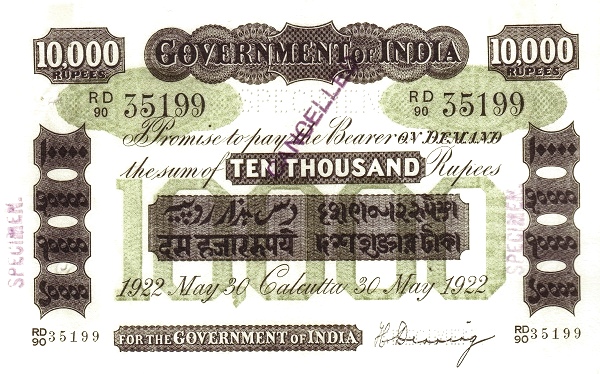
A currency is a standardized form of money used as a medium of exchange, including banknotes, coins, electronic balances, and central bank digital currencies. More broadly, it is a system of money in common use within a specific environment, especially for people in a nation state, with examples such as the Pound sterling, euro, Japanese yen, and U.S. dollar as government-issued fiat currencies.
- first coinage
- Earliest known coins were minted under King Alyattes of Lydia, then adopted by the Greeks and Persians
Lore & Background
Originally, currency functioned as a form of receipt representing grain stored in temple granaries in Sumer and Ancient Egypt. By the late Bronze Age, oxhide-shaped copper ingots from Cyprus possibly functioned as currency. Piracy and raiding during the Bronze Age collapse disrupted this system, and recovery came with Phoenician trade in the 10th and 9th centuries BC, leading to real coinage, first minted under King Alyattes of Lydia.
Reader's Guide
Currency's significance lies in its evolution from commodity-based receipts to standardized coinage and paper money, enabling trade, taxation, and economic organization across civilizations. The article traces its development from ancient grain receipts in Sumer and Egypt to metal coinage in Lydia and Greece, and later to paper money in premodern China. Currency systems—fiat, commodity, and representative—depend on what guarantees value, whether the economy or government reserves. Currencies act as stores of value and are traded in foreign exchange markets, with legal tender laws requiring specific units for government payments. The introduction of paper money in China addressed the need for less cumbersome exchange, while in Europe it reduced risks of transporting precious metals but also led to inflationary pressures when overissued. Currency remains central to modern economies, with its value and acceptance shaped by government decree, market forces, and historical precedent.
Did You Know?
- Early currency in Sumer and Ancient Egypt functioned as receipts for grain stored in temple granaries.
- Oxhide-shaped copper ingots from Cyprus may have served as currency in the late Bronze Age.
- Paper money originated in premodern China, from the late Tang dynasty into the Song dynasty.
The Antagonism at Money's Core
Demurrage currency rests on a provocative premise: the two roles that conventional money plays—serving as a store of value and acting as a medium of exchange—are fundamentally in conflict. Proponents of this view argue that the better money performs as a repository of wealth, the worse it functions as a tool for trade. A bushel of apples, for instance, must be sold before it rots, forcing its owner into timely exchange. Money, by contrast, carries no such urgency; its holder can simply wait for prices to drop. Demurrage reverses this asymmetry by imposing a steady, predictable loss of purchasing power, so that holding cash becomes as costly as holding perishable goods. Gesell captured this logic vividly, insisting that money must be made 'worse as a commodity' to become 'better as a medium of exchange.' Under this framework, Gresham's law—bad money drives out good—actually works in favor of demurrage, because the depreciating note naturally circulates faster than any stable alternative, pulling economic activity forward rather than letting it stagnate in private vaults.
Gesell and the Architecture of Free Money
The intellectual backbone of demurrage currency belongs to Silvio Gesell, a German-Argentine economist who embedded the concept within his broader Freiwirtschaft system. He coined the term Freigeld—literally 'free money'—to signal that currency should be liberated from two chains: the incentive to hoard and the extraction of interest. In his work The Natural Economic Order, Gesell argued that a currency's exchange power and its banking utility exist in inverse proportion, meaning a note optimized for one role is inherently weakened in the other. His proposed remedy was a demurrage rate of roughly 5.2 percent per year, though he acknowledged that real-world experimentation would be needed to calibrate the optimal figure. Gesell envisioned a cascade of benefits: higher velocity of circulation, the elimination of inflation, lower unemployment, an interest-free economy, and a reduction in the frequency of recessions. Even John Maynard Keynes, while offering criticism, conceded that the fundamental idea behind stamped money was sound, lending the concept a measure of legitimacy within mainstream economics.
Stamp Scrip and the Depression Experiments
Demurrage is not merely a theoretical curiosity; it has deep historical roots, appearing in ancient Egypt and across Europe during the High Middle Ages, where it is credited with contributing to periods of economic prosperity. Its most dramatic modern test came during the Great Depression. After national currencies in Germany and Austria collapsed in the early 1930s, communities issued emergency stamp scrip to restart the circular flow of income. Each paper certificate carried a series of printed boxes; every month the holder had to purchase and affix a stamp—typically worth about one percent of the note's face value—into the next box, or the scrip became worthless. This simple mechanism created a powerful incentive to spend quickly, and in practice it significantly accelerated the velocity of money. Some holders even paid their taxes ahead of schedule to avoid the monthly fee. Despite these successes, central banks in most cases banned the currencies, citing violations of the state's monopoly on money.
Why Demurrage and Inflation Are Not the Same Disease
Although both demurrage and inflation cause money to lose purchasing power, their economic consequences diverge sharply, especially during recessions. Inflation is defined as a general rise in prices, yet during a downturn prices typically fall. When falling prices are expected to continue, rational actors delay purchases, commerce contracts, and a game-theory trap emerges: society collectively wants more trade, but no individual hoarder benefits from spending first. Because falling prices mean there is no inflation by definition, there is no penalty for withholding cash, and money holders are effectively rewarded for sitting on their funds. Demurrage sidesteps this problem entirely. Even when prices are declining, a demurrage note continues to lose value at its fixed rate, so the holder faces a constant, predictable cost of inaction. This persistent pressure compels spending and keeps the circular flow of income moving, which is precisely why demurrage currencies were deployed as emergency instruments to reinvigorate economies that conventional monetary tools could not reach.
Gallery




Frequently Asked Questions
What is Currency?
Currency is the standardized system of money that a particular community or nation relies on to carry out everyday trade. It encompasses physical banknotes and coins as well as electronic balances and central bank digital currencies.
When did Currency first appear in history?
The earliest known coins were struck under King Alyattes of Lydia, marking the birth of minted currency. Greek and Persian polities soon adopted the practice, spreading standardized, government-backed money across the ancient world.
What forms can Currency take today?
Beyond familiar paper bills and metal coins, modern currency also includes digital bank balances and central bank digital currencies. All of these serve the same core purpose: acting as a widely accepted medium of exchange within a given economic environment.
How is Currency different from just 'money'?
Currency specifically denotes the system of money in common use within a particular environment, such as a nation-state. Examples include the U.S. dollar, the euro, the Japanese yen, and the Pound sterling, all government-issued fiat currencies.
Why is Currency important to an economy?
Currency provides a shared, standardized unit that lets people exchange goods and services without resorting to barter. By anchoring mutual trust in a common medium of exchange, it underpins everything from local markets to international trade.
More in Economic Concepts 1-15
Spotted an error? Know more?
This is a living reference — every entry is fact-audited, and reader corrections feed straight into our audit queue. Suggest an edit · See this site's audit record