
Economy
A social domain of production, distribution, trade, and consumption.

France. Ambassade (U.S.). Service de presse et d'information, France. Ambassade. · Public domain
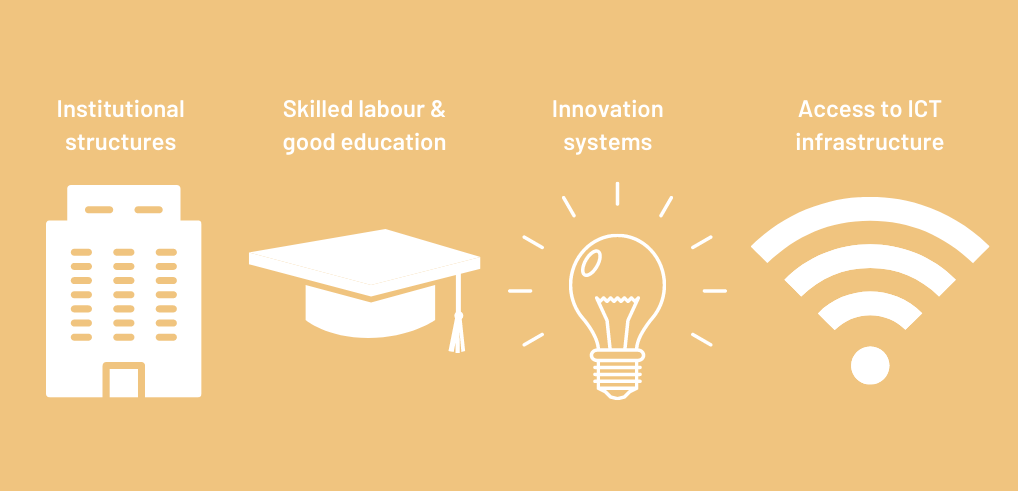
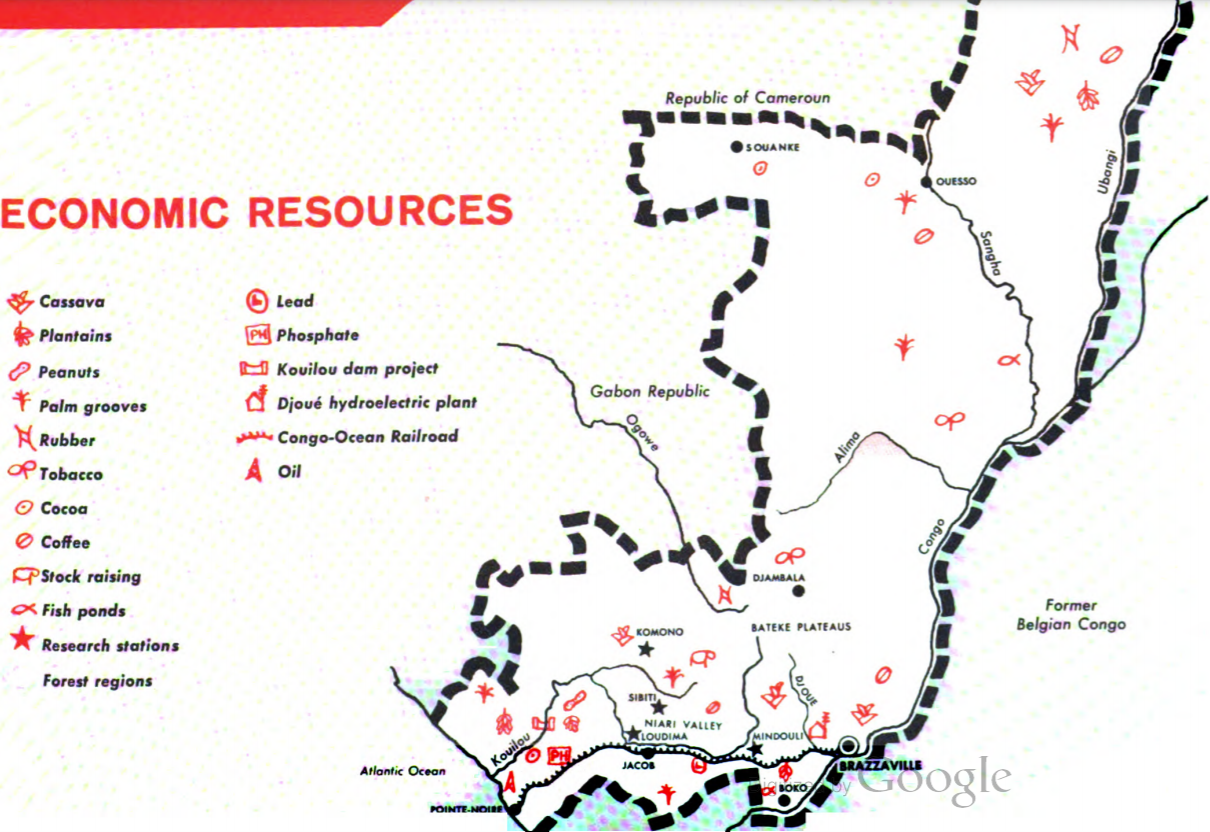
An economy is an area of the production, distribution, trade, and consumption of goods and services. It is defined as a social domain that emphasizes the practices, discourses, and material expressions associated with the production, use, and management of resources. A given economy involves processes that include its culture, values, education, technological evolution, history, social organization, political structure, legal systems, and natural resources as main factors.
- field
- Economics
- known_for
- Social domain of interrelated human practices and transactions; earliest systems in Sumer and Babylon; modern concept popularized after the Great Depression
- earliest_roots
- Sumer developed large-scale economy based on commodity money; Babylonians developed earliest systems of economics with laws on debt, legal contracts, and private property
- key_historical_figures
- Adam Smith (1723–1790), Thomas Malthus (1766–1834), John Maynard Keynes (1883–1946), Friedrich August von Hayek (1899–1992), Milton Friedman (1912–2006), John Kenneth Galbraith (1908–2006)
- etymology
- From Ancient Greek oikonomia (oikos 'house' + nemein 'to manage'); current sense denoting 'economic system of a country or area' developed by the 1650s
Lore & Background
The word 'economy' originates from the Ancient Greek oikonomia, meaning 'household management.' The first known large-scale economy based on commodity money was developed by Sumer, while the Babylonians and neighboring city states created the earliest codified legal and administrative systems for economics, including courts, jails, and government records. In the Middle Ages, economies were largely subsistence-based, with most exchange occurring within social groups.
Reader's Guide
The concept of 'the economy' as a distinct national system did not become popularly known until the American Great Depression in the 1930s. Prior to that, economic thought evolved from mercantilism to the ideas of Adam Smith, who defined elements of a national economy including natural price, competition, supply and demand, and division of labor. The Industrial Revolution marked a major turning point, enabling mass production. In the 20th century, debates between Keynesianism (state manipulation of aggregate demand) and neoliberalism (global free trade advocated by Hayek and Friedman) shaped policy. The late 1950s saw the rise of mass consumption economy, described by John Kenneth Galbraith as an 'affluent society.' In the 21st century, the fall of the Iron Curtain and the spread of the Internet led to concepts of post-industrial society and the information economy, with growing importance of e-commerce and economies of countries like China, Brazil, and India.
Did You Know?
- The word 'economy' derives from Ancient Greek oikonomia, meaning 'household management.'
- The contemporary concept of 'the economy' was not popularly known until the American Great Depression in the 1930s.
Intellectual Roots and the Freiburg School
The social market economy traces its intellectual lineage to the interwar Freiburg school of economic thought, a group of German economists who sought alternatives to both unchecked market liberalism and state-directed socialism. Their ordoliberal framework provided the philosophical bedrock, emphasizing a constitutional framework for competitive markets. However, the model as it was actually implemented diverged from the pure ordoliberal vision. While Walter Eucken focused on establishing a functioning competitive order within constitutional boundaries, Alfred Müller-Armack conceived the social market economy as a broader regulatory policy idea that placed social policy on equal footing with economic policy. Müller-Armack drew on Wilhelm Röpke's anthropo-sociological approach, pursuing what he called "Social Humanism" or "Social Irenics"—a concept rooted in the Greek word for peace and conciliation—to bridge societal divides. This made the model more emphatic about socio-political aims than the narrower ordoliberal economic concept. The result was not merely a defined economic order but a holistic conception seeking to synthesize economic freedom with social security under the active management of a strong state.
The Middle Path and Policy Architecture
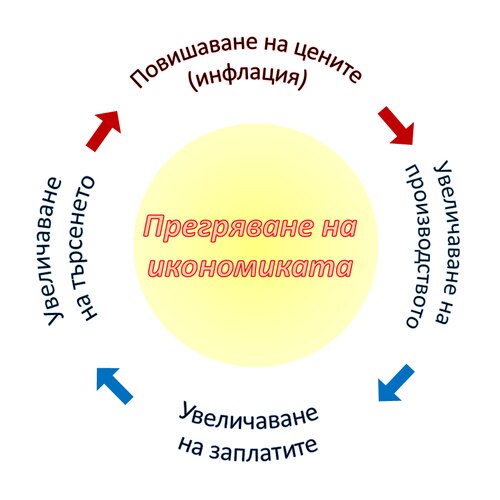
The social market economy was deliberately architected as a middle path, rejecting both the hands-off philosophy of Smithian laissez-faire liberalism and the Marxian vision of replacing private property and markets with social ownership. Rather than planning and directing production, workforce allocation, or sales, the model supports planned efforts to influence the broader economy through organic means—a comprehensive policy framework combining monetary, credit, trade, tax, customs, investment, and social measures, all coupled with flexible adaptation to market conditions. The goal is an economy that serves the welfare and needs of the entire population while maintaining balance among high growth, low inflation, low unemployment, good working conditions, and robust public services. It is not a call for state ownership but a commitment to a welfare state operating alongside private enterprise and fair competition.
Naming, Misconceptions, and Global Comparisons
The model carries multiple names—social market economy, Rhine capitalism, Rhine-Alpine capitalism, the Rhenish model, and social capitalism—each reflecting a different contextual emphasis. "Rhine capitalism" typically appears when contrasting the German approach with the Anglo-Saxon model, though some scholars frame it not as an antithesis but as a successful synthesis of the Anglo-American system with social democracy. Right-wing critics have frequently misread the "social" prefix as a gateway to socialism or even communism, but the model explicitly rejects the replacement of private property and markets with social ownership. In comparative politics, the German approach is set alongside Tony Blair's Third Way, French dirigisme, the Dutch polder model, the Nordic model, the East Asian corporate capitalism of Japan, Korea, and Taiwan, and China's socialist market economy.
Adoption, Evolution, and the Eco-Social Extension
Its ideological appeal now spans ordoliberals, social liberals, and social democrats, reflecting its capacity to accommodate multiple political traditions. The concept has also evolved beyond its original scope: contemporary thinkers have expanded it into the idea of an eco-social market economy, which extends the model's sense of social responsibility to encompass the sustainable use and protection of natural resources. This extension treats environmental stewardship not as a separate policy domain but as an integral dimension of the same holistic societal order that the model has always pursued. The model's enduring relevance lies in its refusal to treat economic freedom and social security as irreconcilable opposites, instead insisting that a strong state can actively manage both in service of a complete humanistic societal order.
Gallery

Frequently Asked Questions
Who is Economy?
Economy is the social domain that covers how humans produce, distribute, trade, and consume goods and services. It is far more than raw numbers—it is the living web of cultural values, legal norms, and material practices through which a society manages its resources.
What are Economy's powers and role?
Economy functions as the connective layer between a society's culture, technology, political structure, and natural resources, converting raw inputs into usable goods and services. In practice, that means it shapes labor organization, legal contracts, and the overall flow of value across a community.
How does Economy's story end?
There is no final chapter; Economy is a continuously evolving process rather than a plot with a fixed conclusion. Each generation rewrites the next act through technological shifts, political upheavals, and cultural reinvention, so the narrative never truly closes.
Why is Economy important?
Economy matters because it is the framework through which every society decides who receives what, how scarce resources get allocated, and how people sustain themselves and one another. Without that coordinating structure, the production, trade, and consumption that keep civilizations running would fall apart.
Where did Economy come from?
The earliest recognizable economic systems took shape in Sumer and Babylon, where commodity money, debt regulations, legal contracts, and private property first became structured. The modern, formalized concept of 'economy' as a distinct field only crystallized after the Great Depression, building on the work of thinkers like Adam Smith and John Maynard Keynes.
More in Economic Concepts 1-15
Spotted an error? Know more?
This is a living reference — every entry is fact-audited, and reader corrections feed straight into our audit queue. Suggest an edit · See this site's audit record