
Derivative (finance)
A contract whose value derives from an underlying asset.

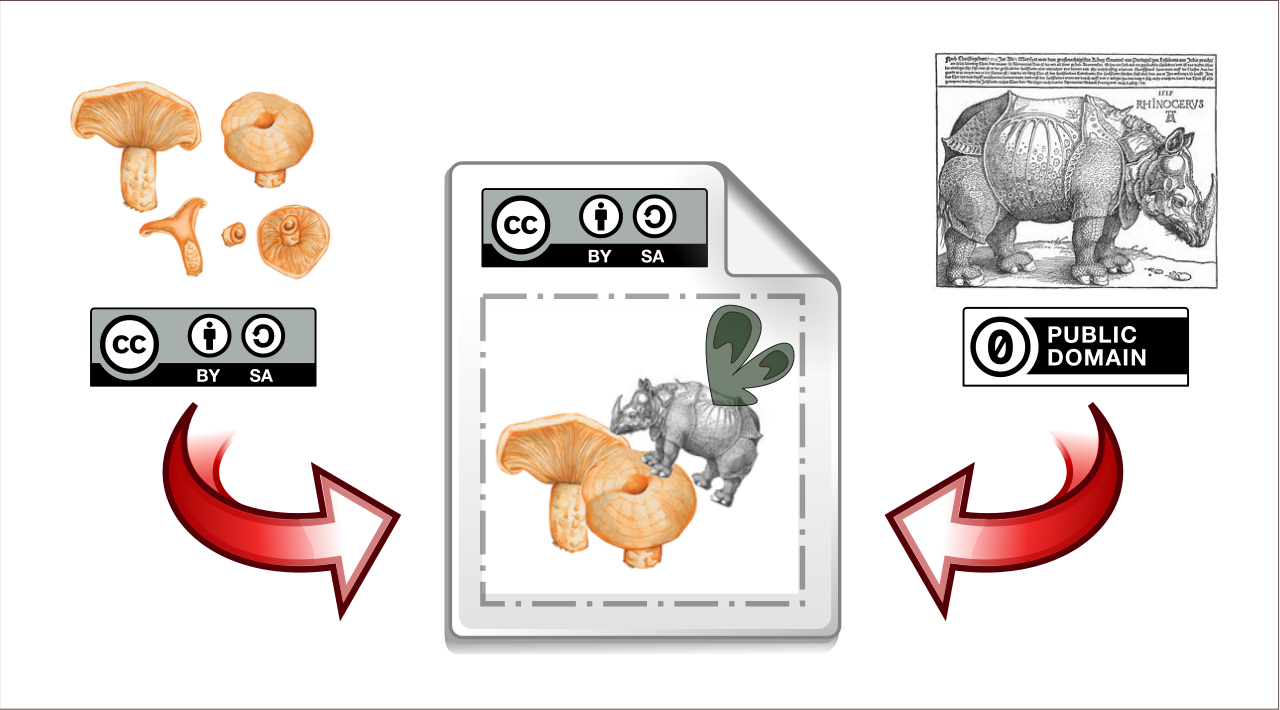
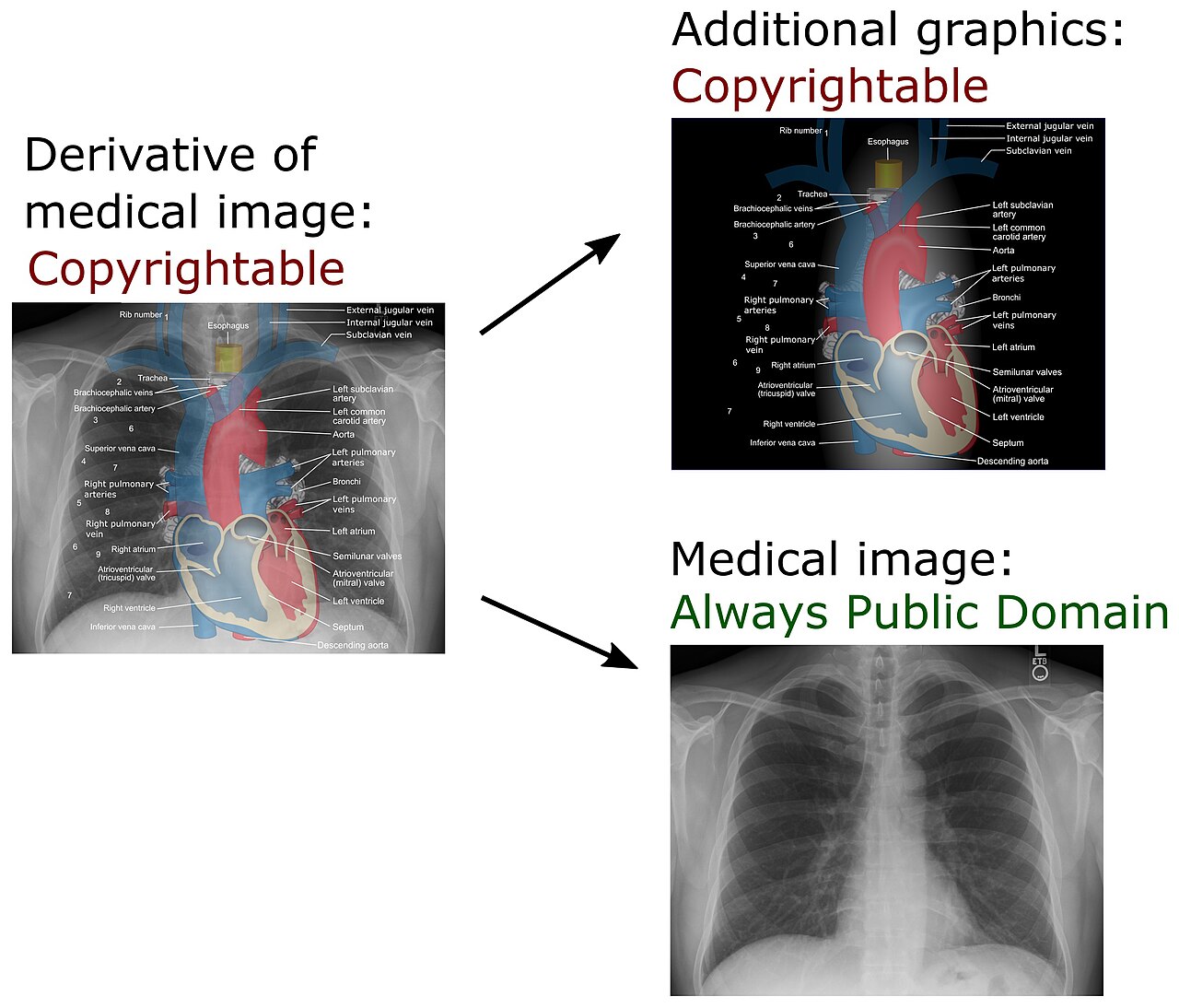
Mikael Häggström , from source images by ZooFari , Stillwaterising and Gray's An · CC BY-SA 3.0
A derivative is a financial contract between a buyer and a seller whose value depends on the performance of an underlying asset, such as a commodity, financial instrument, price index, currency, or interest rate. Derivatives are one of the three main categories of financial instruments, alongside equity and debt, and are used for hedging, speculation, and gaining access to otherwise hard-to-trade assets.
- First known example
- Olive press monopoly scheme by Thales, described by Aristotle (modernly interpreted as a derivative-like contract)
Lore & Background
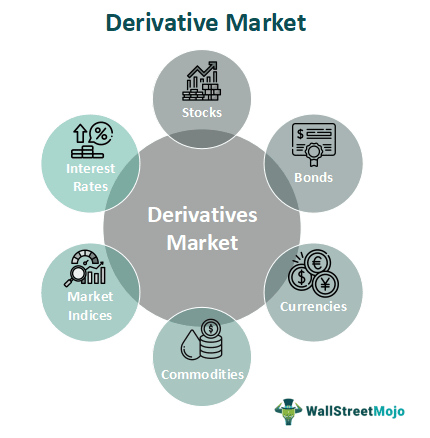
Derivatives are contracts between two parties that specify conditions under which payments are made, including dates, underlying variables, and notional amounts. The underlying assets can be commodities, stocks, bonds, interest rates, currencies, or even other derivatives. Derivatives allow the separation of ownership from market value participation, enabling leverage, inverse exposure, or risk control. They are broadly categorized as 'lock' products (e.g., swaps, futures, forwards) that obligate parties, or 'option' products that grant a right but not an obligation.
Reader's Guide
Derivatives are significant because they allow market participants to manage risk, speculate, and access assets that might otherwise be difficult to trade. They are used by agricultural and energy companies to hedge against weather and commodity price fluctuations, and by lenders to protect against borrower default. After the 2008 financial crisis, U.S. regulators pushed for more exchange trading, and derivatives reform was included in the Dodd–Frank Act. Warren Buffett famously called credit default swaps 'financial weapons of mass destruction' in 2002.
Did You Know?
- The oldest known derivative-like contract is often attributed to an olive press scheme by the philosopher Thales, though Aristotle described it as a monopoly on olive presses, not a derivative contract itself.
- Rice futures have been traded on the Dojima Rice Exchange since the eighteenth century.
- Most derivatives are traded over-the-counter or on exchanges such as the Chicago Mercantile Exchange.
Hedging and the Management of Exposure
Derivatives occupy a central place in how financial participants manage exposure to uncertain outcomes. At its core, the discipline of finance is concerned with how individuals, businesses, and organizations raise, allocate, and manage monetary resources over time while accounting for the risks associated with their activities and investments. A hedge represents an investment position deliberately taken to offset potential losses in another asset, allowing a holder to reduce the volatility of an overall position. However, this protection is never perfect. Basis risk captures the specific danger that a hedge and its underlying asset will not move in perfect lockstep, meaning the offsetting position may fail to neutralize losses precisely when they occur. This imperfection is a defining characteristic of derivative-based risk management: the tool mitigates exposure but introduces its own layer of uncertainty. Understanding this trade-off between protection and residual risk is fundamental to any serious engagement with derivative instruments, as no single position can guarantee a complete elimination of downside.
Futures, Leverage, and Market Positioning
A futures contract is defined as a standardised agreement to buy or sell an asset at a specified future date, making it one of the most structured forms of derivative available in financial markets. The standardisation aspect is critical: it allows participants to enter positions without negotiating bespoke terms, facilitating liquidity and broad participation across the market. When a holder takes a long position in such an instrument, they hold a positive amount of the financial product, effectively gaining exposure to the underlying asset's price movements. Derivatives also interact closely with leverage, which is the use of borrowed funds in the purchase of an asset. This combination of leverage and derivative exposure can amplify both gains and losses, making the management of positions a delicate exercise. Arbitrage, the capitalisation of risk-free opportunities in financial markets, further illustrates how derivative instruments create interconnected pricing relationships that disciplined participants can exploit when temporary misalignments appear between related instruments.
Valuation, Margin, and Accounting Treatment
The accounting and valuation treatment of derivative positions introduces a distinct set of operational requirements for market participants. Mark to market is an accounting method that values assets and liabilities at their current market prices, ensuring that the reported worth of a derivative position reflects real-time conditions rather than historical cost. This approach is particularly significant for instruments whose value fluctuates with underlying asset prices. Margin, a type of financial collateral used to cover credit risk, serves as a buffer that protects counterparties from potential losses if a position moves adversely. The requirement to post and maintain margin means that derivative transactions are not merely paper entries but carry tangible financial obligations. Cash flow, defined as the movement of money into or out of a business, project, or financial product, is another critical dimension: the timing of payments associated with derivative contracts must be carefully tracked. Cash flow matching, a strategy that aligns asset cash inflows with liability outflows, becomes essential when derivative positions create future payment obligations that must be met on schedule.
Derivatives Within the Broader Financial Architecture
Derivative instruments do not exist in isolation; they are embedded within a vast global financial system that serves as the framework for capital flows across borders and institutions. The capital asset pricing model, a finance model linking expected return to systematic risk, provides one of the theoretical foundations for understanding how derivative positions fit within broader investment decisions. Modern portfolio theory, a mathematical framework for investment risk, further contextualises the role of derivatives by showing how diversification across a collection of investments can manage overall exposure. In this framework, a derivative position is not simply a standalone bet but a component of a portfolio whose total risk and return must be evaluated holistically. The discipline of finance, which encompasses the study of money and other assets, the management and control of those assets, and the profiling and managing of related risks, treats derivatives as one tool among many in the toolkit available to entrepreneurs, investors, and institutions seeking to navigate uncertainty and allocate resources efficiently over time.
Gallery


Frequently Asked Questions
Who is Derivative (finance)?
Derivative (finance) is a financial contract between two parties—buyer and seller—whose value is pulled entirely from the performance of some underlying asset, whether that be a commodity, currency, index, or interest rate. It sits as one of the three core pillars of financial instruments, right alongside equity and debt.
What are Derivative (finance)'s powers/role?
Its main abilities are hedging risk, enabling speculative bets on price movements, and giving traders access to assets that would otherwise be difficult to buy directly. In practice, it acts as a flexible bridge between a party and an underlying market they might not want to hold outright.
Where does Derivative (finance)'s origin story begin?
The earliest known example traces back to Thales of Miletus, whose olive-press monopoly scheme—recorded by Aristotle—is now widely interpreted as a proto-derivative contract. That ancient anecdote is typically cited as the conceptual ancestor of the modern instrument.
Why is Derivative (finance) important in the canon?
It occupies one of only three foundational categories of financial instruments, making it a structural backbone of modern markets. Without it, participants would lose a primary tool for managing exposure, taking directional views, and reaching otherwise illiquid or hard-to-acquire assets.
Who does Derivative (finance) depend on, and what does that relationship look like?
It is entirely tethered to an underlying asset—commodity, financial instrument, price index, currency, or interest rate—meaning its worth rises and falls in lockstep with that reference. The contract itself carries no intrinsic value; it is a mirror of the underlying's performance.
More in Economic Concepts 1-15
Spotted an error? Know more?
This is a living reference — every entry is fact-audited, and reader corrections feed straight into our audit queue. Suggest an edit · See this site's audit record