Exchange rate
Rate at which one currency is exchanged for another.

Gorgo · CC BY-SA 3.0
An exchange rate is the rate at which one currency will be exchanged for another. It is regarded as the value of one country's currency in relation to another, and is determined by the exchange rate regime each country chooses, such as floating, pegged, or hybrid. Exchange rates are central to international finance, trade, and travel, with the foreign exchange market operating continuously except weekends.
- field
- Finance
- known_for
- Rate at which currencies are exchanged
- market_size
- US$5.3 trillion per day (interbank, valued by Bank for International Settlements)
Lore & Background
In floating regimes, rates are determined in the foreign exchange market, open 24 hours a day except weekends. The spot exchange rate is the current rate, while the forward exchange rate is quoted today for future delivery. In the retail market, money dealers offer buying and selling rates, with the bid–ask spread covering costs and profit. Different rates may apply for cash, documentary transactions, or electronic transfers.
Reader's Guide
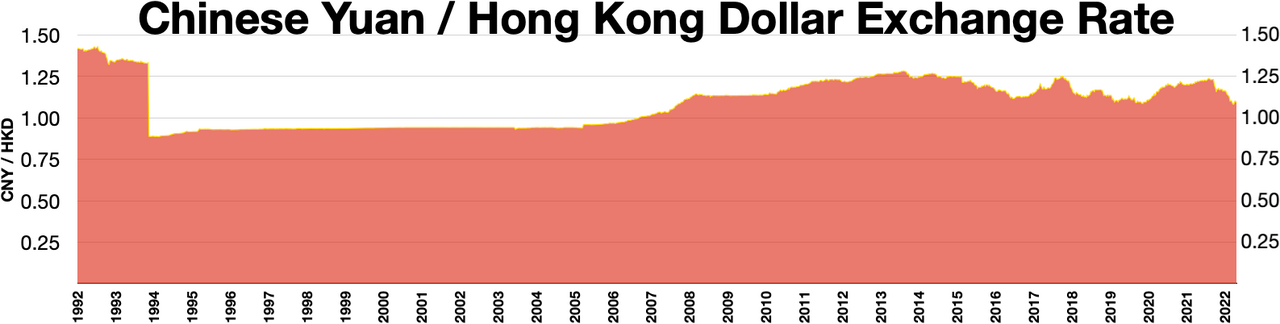
Exchange rates are fundamental to global finance, enabling currency conversion for trade, investment, and travel. Each country chooses its exchange rate regime, reflecting political considerations, as there is no agreement on optimal policy. The foreign exchange market is the largest financial market, with interbank trading valued at US$5.3 trillion daily. Retail foreign exchange trading, a small segment at 5.5% of the market, allows individuals to speculate via electronic platforms. Quotation conventions vary: direct quotation uses home currency as price currency, while indirect quotation uses home currency as unit currency. The choice of regime—floating, pegged, or hybrid—affects trade balances and currency valuation, as seen in historical pegs like the Chinese yuan to the US dollar. Exchange rate classification includes buying and selling rates from a bank's perspective, with the buying rate converting foreign currency to fewer domestic units.
Did You Know?
- The interbank foreign exchange market is valued at US$5.3 trillion per day by the Bank for International Settlements.
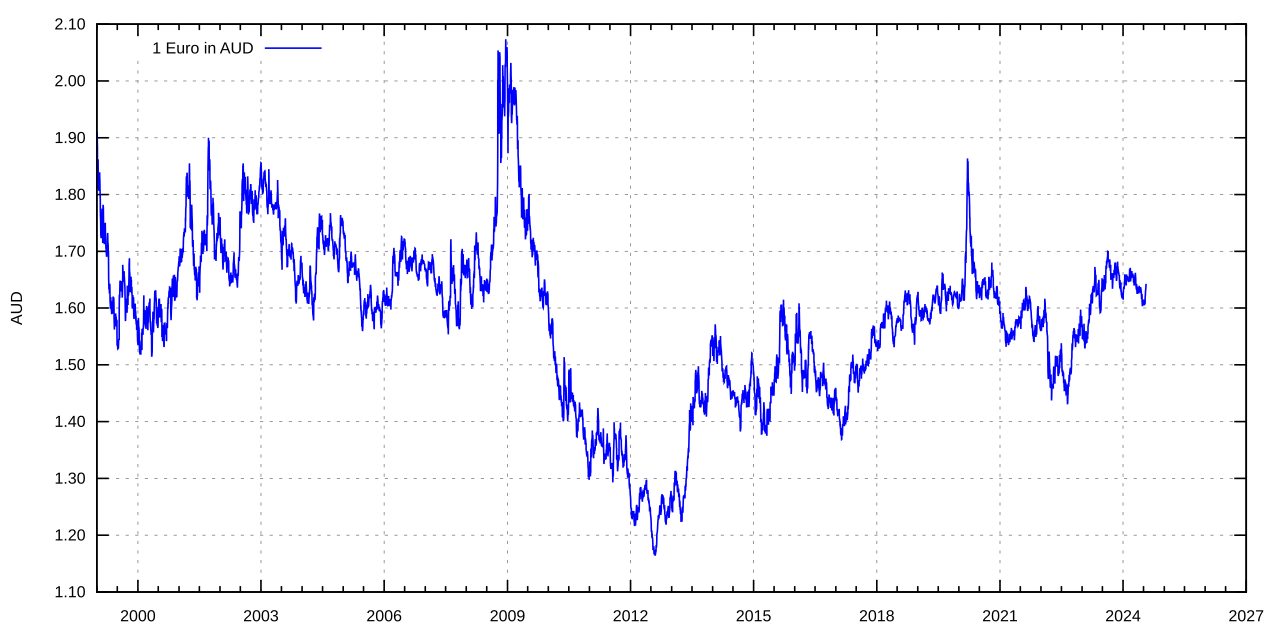
- Exchange rates are quoted with a market convention; for example, in EUR to AUD, EUR is the fixed currency.
The Incompatible Trinity: A Structural Constraint
The fundamental constraint shaping every exchange rate decision is the so-called incompatible trinity. A nation's monetary authority can never simultaneously enjoy full financial integration, exchange rate stability, and monetary independence. They may claim two of the three, but the third must be sacrificed. A country that pegs its currency to the U.S. dollar, for example, gains the certainty that trade partners and foreign investors crave, which can attract foreign direct investment. Yet in doing so it surrenders the ability to set its own monetary policy, because the relative strength of its currency becomes entirely tethered to the anchor currency's movements. Conversely, a free-floating currency like the dollar grants full monetary independence but forfeits the stability that fixed regimes provide. This structural trade-off means there is no universally correct exchange rate level, and the overall national welfare effect of any particular regime is extraordinarily difficult to calculate. Every choice along this spectrum carries an inherent cost that no policy adjustment can fully offset.
Distributional Consequences: Winners and Losers
No exchange rate is economically neutral. Every shift in a currency's value redistributes wealth across the domestic economy, creating identifiable winners and losers. When a currency appreciates, consumers enjoy lower prices on imported goods, and domestically oriented industries that compete with imports see their competitive position strengthened. Exporters and import-competing sectors, however, suffer because their goods become more expensive for foreign buyers. A depreciation reverses this pattern entirely: export- and import-competing industries gain a price advantage, while consumers face higher costs on foreign goods and domestic non-tradeable industries lose ground. These distributional consequences are a central reason exchange rate policy is so politically charged. The choice between a fixed and a floating regime is not merely a technical monetary decision; it determines which sectors of the economy bear the cost of external shocks and which capture the benefits of trade and investment flows, making the debate inherently a question of who pays and who profits.
The Spectrum of Regimes: From Clean Float to Basket Peg
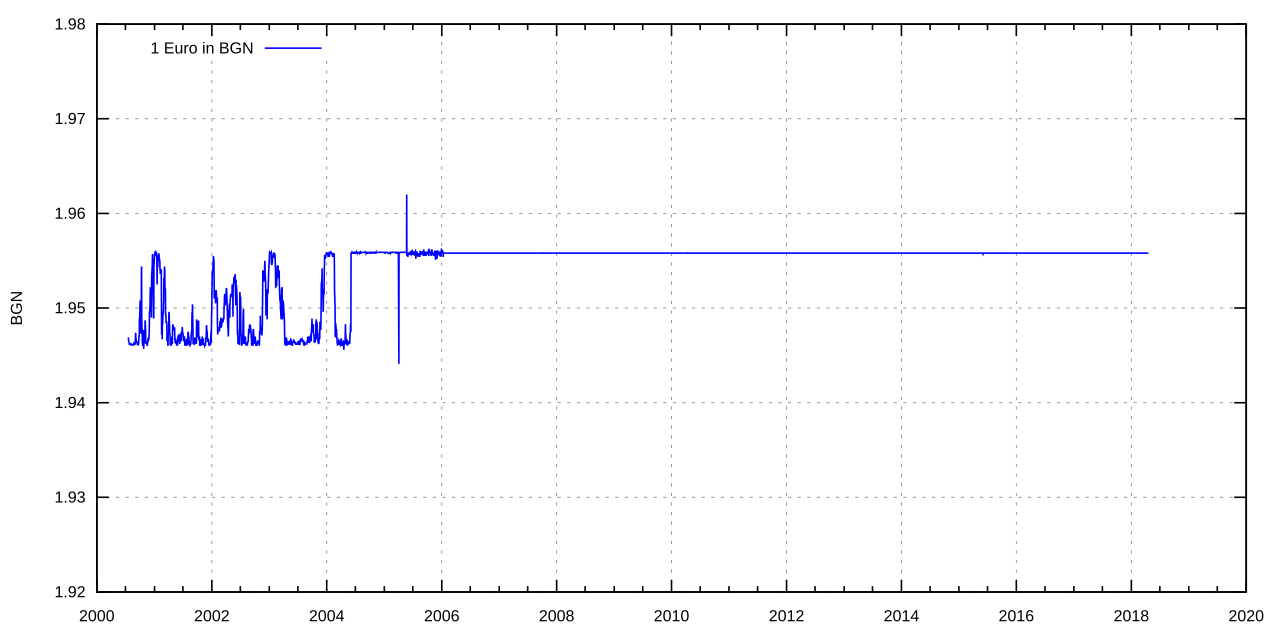
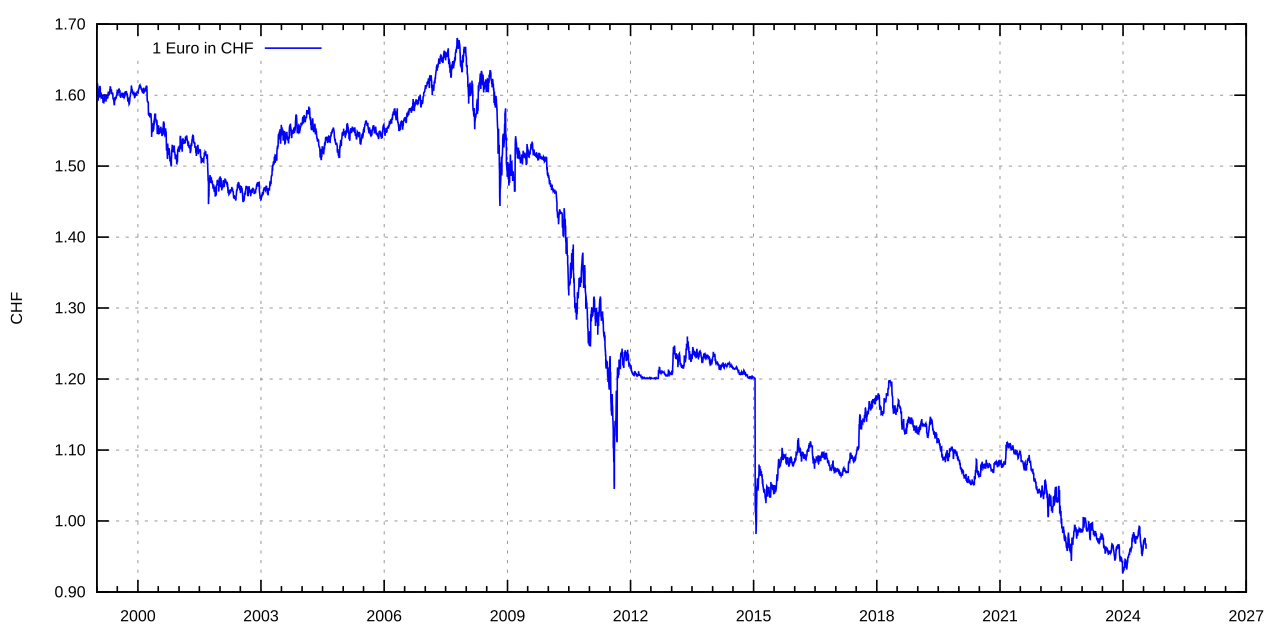
Exchange rate management exists on a continuum rather than a simple binary. At one end sits the free float, or clean float, where a currency's value responds entirely to foreign-exchange market forces with no government intervention. At the other end is the fixed, or pegged, regime, in which a monetary authority locks its currency to another currency or commodity—historically gold, today typically the U.S. dollar, the euro, or the British pound. Between these poles lie managed floats, where authorities intervene through open-market operations, interest-rate adjustments, or reserve buying and selling to steer the rate within acceptable bounds, sometimes setting explicit ceilings and floors. Intermediate regimes add further nuance: a target zone allows only tiny variation, well within plus or minus two percent, as Denmark maintains against the euro at roughly 7.44 krone per euro. A crawling peg lets the rate drift along a steady trend, while a currency basket peg, as Kuwait has employed, diversifies the anchor across several partner currencies to reduce single-currency risk.
Classification and Policy Reality: The GGOW Framework
Understanding how a country actually manages its currency requires looking beyond its official declaration. The GGOW classification method, developed by Ghosh, Guide, Ostry, and Wolf in the mid-1990s, addresses this gap by combining the IMF's de jure classification with observed exchange-rate behavior. This trichotomy approach distinguishes between what a country says it does and what it actually does in the foreign-exchange market, revealing cases where a nominally floating currency is in practice heavily managed, or a declared peg is informally allowed to drift. The classification rests on structural factors that also drive monetary policy: economic scale, trade openness, inflation dynamics, labor-market elasticity, financial-market development, and the degree of capital mobility. Because exchange rate policy and monetary policy are deeply intertwined and depend on many of the same underlying variables, the GGOW framework treats them as a unified analytical lens rather than separate domains, offering a more honest picture of a nation's true currency stance.
Gallery
Frequently Asked Questions
Who is Exchange rate?
Exchange rate is the financial mechanism that sets how much one nation's currency is worth when swapped for another. It acts as the pricing bridge connecting different monetary systems in the global economy.
What are Exchange rate's powers and role?
It governs the relative value of one currency against another, shaped by whichever regime a country adopts—floating, pegged, or hybrid. It sits at the center of international trade, cross-border finance, and everyday travel.
How does Exchange rate's story end?
It never truly does; the foreign exchange market where Exchange rate operates runs continuously around the clock, pausing only on weekends. Its narrative is an ongoing, ever-shifting negotiation between competing currencies.
Why is Exchange rate important to the canon?
It is the backbone of cross-border commerce, dictating how costly imports become and how competitive a country's exports remain. Without it, international trade and travel would lack a shared pricing language.
How big is Exchange rate's fanbase (the FX market)?
The interbank foreign exchange market moves roughly US$5.3 trillion in daily volume, a figure valued by the Bank for International Settlements. Retail traders make up only about 5.5% of that total, so institutional players dominate the scene.
More in Economic Concepts 1-15
Spotted an error? Know more?
This is a living reference — every entry is fact-audited, and reader corrections feed straight into our audit queue. Suggest an edit · See this site's audit record